Managing your money shouldn’t feel hard, but for a lot of people, it does. You’re trying to make good decisions, pay your bills, plan for the future, and still enjoy your life, all while getting conflicting advice from family, friends, and internet gurus.
That’s where a financial coach comes in. A coach serves as a trusted guide for your finances. They can help you understand where your money is going, set realistic goals, and build better habits, without selling you products or managing your investments. A good financial coach is someone you can turn to with questions and who you can rely on for accountability.
What is a financial coach?
A financial coach is someone who helps you improve your financial situation through guidance and education. They can help you with topics such as:
- Goal setting
- Mindset around money
- Budgeting
- Debt reduction
- Getting started with investing
- General financial education
- Accountability to stay on track
Financial coaches tend to be more hands-on than other financial professionals and will get involved with day-to-day financial decisions, talk you through decisions, and help you build systems you can sustain.
While some coaches may hold certifications or credentials, there is no governing body for coaches and no regulatory entity that oversees the coaching industry. Anyone can call themselves a coach, so it’s important to choose someone you trust.
Who do financial coaches work with?
Financial coaches work with people who need help with their day-to-day financial picture. There’s no minimum income, net worth, or investment balance required. It could be a young adult on their own for the first time, or a couple close to retirement.
If you are feeling overwhelmed by your finances and are ready to make a change, a financial coach might be the perfect solution.
Financial coach vs. financial advisor: What’s the difference?
The biggest difference between a financial coach and a financial advisor comes down to focus. Financial coaches concentrate on financial education and routine financial decisions, while financial advisors focus on long-term investments and wealth building.
There can also be a big difference in how they are paid. Financial coaches often sell packages that can last three to twelve months. You will be in regular contact with your coach throughout the coaching program.
Financial advisors may be paid through asset-based fees, commissions, flat planning fees, or a combination of any of these. Both roles can be valuable, but they serve different needs, especially across different life stages.
When does it make sense to hire a financial coach?
While almost everyone can benefit from a financial coach, there are certain moments in life when it can be particularly helpful.
When you’re a young adult
Living on your own for the first time requires you to make some key financial decisions that could affect you for years, so it’s important to build good habits early. A financial coach can help you set up a budget, understand your workplace benefits, and avoid mistakes that can take years to undo.
When you’re newly married
Getting married can be a great time to hire a financial coach, especially if you are combining your finances for the first time. A coach can help you discuss your expectations around money with your new spouse and ensure both partners are on the same page.
Working together on shared financial goals not only brings you closer as a couple but also supercharges your progress.
When you’re overwhelmed with debt
Debt can be overwhelming, and it’s easy for it to get out of control. If you are ready to tackle your debt head-on and live within your means, working with a coach can help. They can make things feel more manageable, help you create a plan, and keep you accountable as you pay down your debt.
When you want to break bad money habits
Financial mistakes don’t always lead to overwhelming amounts of debt. Sometimes you find yourself living paycheck to paycheck when you don’t need to be, because you have bad money habits.
If you find that you set goals but just can’t seem to reach them, a financial coach can help you get on track.
When you feel anxious about money
Money anxiety is incredibly common. For some people, it’s tied to past experiences or financial trauma, which can make financial planning very difficult. But ignoring your finances never leads to abundance and wealth. If you are ready to face your financial situation, even if it’s scary, then a coach is a good partner on that journey.
Keep in mind that a financial coach is not a therapist, so if you struggle with anxiety, you may want to add a therapist to your team as well.
When you’re newly divorced
Divorce usually brings major financial changes, especially if your spouse handled all the money in the marriage. Having a coach by your side during this stressful time can make things go a bit more smoothly.
You may not even be fully aware of your financial situation, which can be scary and leave you feeling unprepared. A coach can make sure you are asking the right questions and help you set up a system that will work for you going forward.
How much does it cost to hire a financial coach?
Each coach offers different packages and price points, but coaches typically charge between $100 and $300 per hour. Some will have packages for a set period, such as three or six months. Others will simply charge an hourly rate.
Before you sign up, be sure you understand what you are getting and feel comfortable that you will be able to complete the program. For example, if you will meet every two weeks for three months, ensure your schedule accommodates it.
If the coach’s pricing is outside your budget, look into group coaching or digital courses. These can also be great ways to get started without a huge financial commitment. But again, make sure you will actually finish the program. Group coaching and courses have less built-in accountability, making it easier to drop out when things get difficult.
Lastly, if you find someone you really want to work with, let them know your situation. They may be able to create a custom package for you that better meets your needs. They may also be able to refer you to a colleague or state program that can accommodate your budget.
How do I find a financial coach?
Finding the right financial coach can be tough. You need to find someone who fits your budget and whose personality you click with.
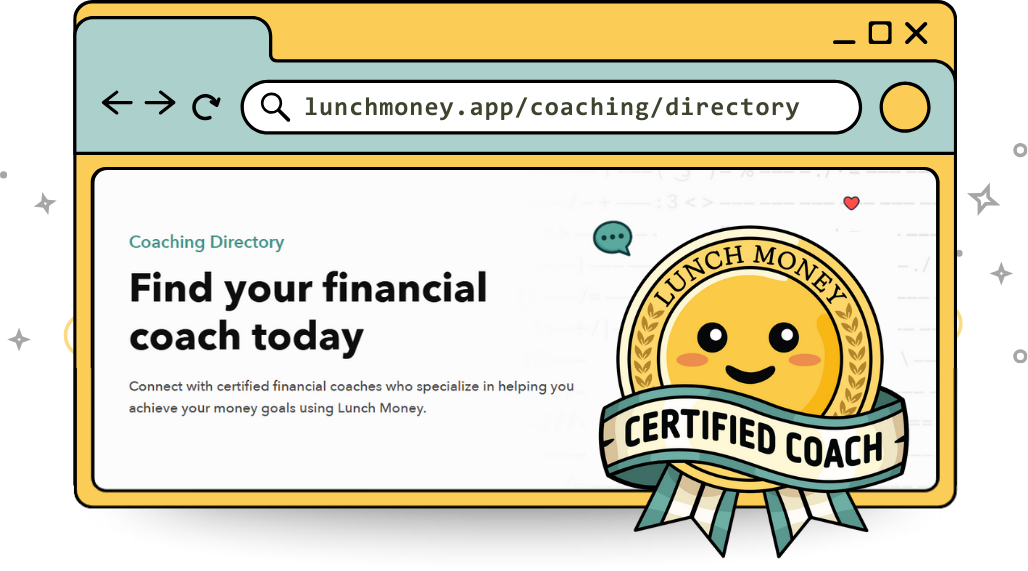
A good place to start is the Lunch Money Financial Coach Directory. It features experienced coaches familiar with the Lunch Money budgeting system who are ready to help you reach the next phase of your financial life. You can browse profiles, learn about each coach, and reach out directly if you find the right fit for you.