Ever feel like your spending is out of control? A no-spend challenge is like hitting the reset button for your wallet. The idea is super simple: for a set amount of time, you commit to spending money only on actual necessities. That’s it! It’s a surprisingly powerful way to uncover poor spending habits, build better financial routines, and rediscover things that make you happy—without the price tag.
Whether you’re trying to save for something big, curb impulse purchases, or simply want a better handle on your finances, a no-spend challenge is a flexible and customizable way to take back control of your money. And who knows? You might even surprise yourself.
What is a No-Spend Challenge?
A “No-Spend Challenge” is precisely what it sounds like. You pick a timeframe—like a weekend, a week, or a month—and commit to not spending money on anything except essentials.
What counts as “essential” depends on you and how long you’re doing it. For most people, necessities include:
- Mortgage/ rent
- Utilities
- Groceries
- Transportation
- Healthcare
- Insurance
- Household bills
Examples of non-necessities are:
- Restaurants
- Clothing (assuming it’s for a shorter period of time)
- Entertainment
- Hobbies
- Tech gadgets
- Shopping
- Travel
Some items blur the lines. Clothes might be considered non-essential for a week or a month, but not likely for a year-long challenge. Gifts might be essential to you, but not to someone else.
The key is to define a timeframe and a list of non-essentials that work for you, and stick to it.
Why Bother With a No-Spend Challenge?
A no-spend challenge can do a lot more than just help you save more money. It can also help you break old habits and reset your money mindset.
1. Breaks Bad Money Habits
It’s easy to tap your debit or credit card without a second thought, whether you’re at the drive-through for comfort food after a rough day at work, or feeling the need to buy a new outfit for that first meeting with a new co-worker.
A no-spend challenge forces you to pause and ask: Do I really need this?
When you feel the urge to spend, take a moment to consider what’s really going on. Does the cheeseburger and fries after a long day provide some much-needed comfort? Maybe a cozy bath or your favorite show is a better option.
And how about that new outfit? Perhaps you believe it will make you feel more confident when meeting someone for the first time. If you’re looking for confidence, maybe a pep talk before the meeting or practicing a power pose will do the job—no shopping required.
2. Reset Your Money Mindset
Instead of thinking “What can I buy?” you’ll start thinking about “What can I do without?” This shift can lead to a more frugal lifestyle. You’ll spend a lot less if your first thought is to find a free or inexpensive way to solve a problem, rather than jumping directly to spending money.
3. Save More Money
The most obvious benefit of a no-spend challenge is that you’ll save a bunch of money. By hitting pause on non-essential spending, it’s like putting your money on a vacation from impulse buys and “treat yourself” moments. It adds up quickly: even skipping small daily expenses can leave you with a nice chunk of cash at the end of your challenge. It’s a great way to prove to yourself that you can save more, and maybe make some of those savings habits stick for good.
How to Set Up a No-Spend Challenge (and Actually Stick to It)
Ready to give it a shot? Here’s how to make your no-spend challenge work:
Pick your timeframe: Start small if needed. A month is popular, but if that sounds daunting, try a weekend. You can always build up to a week, two weeks, or longer once you’ve got the hang of it.
Set your no-spend rules: Make your list of essential and non-essential expenses. Review your budget or bank statements to identify any hidden expenses that could catch you off guard.
Plan ahead: Do you have an expensive event coming up on your calendar? See if you can reschedule it or get creative. Maybe you could swap that pricey dinner out with friends for a homemade meal instead.
Find an accountability partner: Doing this with a spouse or partner? Awesome — you’ve got built-in support. If not, ask a friend to check in on you. Accountability goes a long way.
No Spend Challenge Survival Tips
No-spend challenges can be tough. Here are some tips to get through it without losing your mind.
- Focus on free activities: Get books from the library, explore local parks, or find free classes online.
- Say goodbye to marketing emails: Unsubscribe from marketing emails that lure you in with big sales.
- Leave your cards at home: If you’re going out and know you’ll be tempted to spend money, try leaving your debit and/or credit cards at home.
- Create a wishlist instead of making impulse purchases: When shopping online, create a wishlist of items you want to buy, rather than making the purchase. If you still want the item after your challenge is done, you can consider buying it—but you might be surprised to find that the urge has passed.
- Track your savings: Keep track of how much you’re saving—it can be very motivating. Use Lunch Money to track your spending and see exactly how much you saved during your no-spend challenge.
To learn more about the no-spend challenge on Youtube, check out this video by Jacob Wade!
Create a Successful No-Spend Challenge With Lunch Money
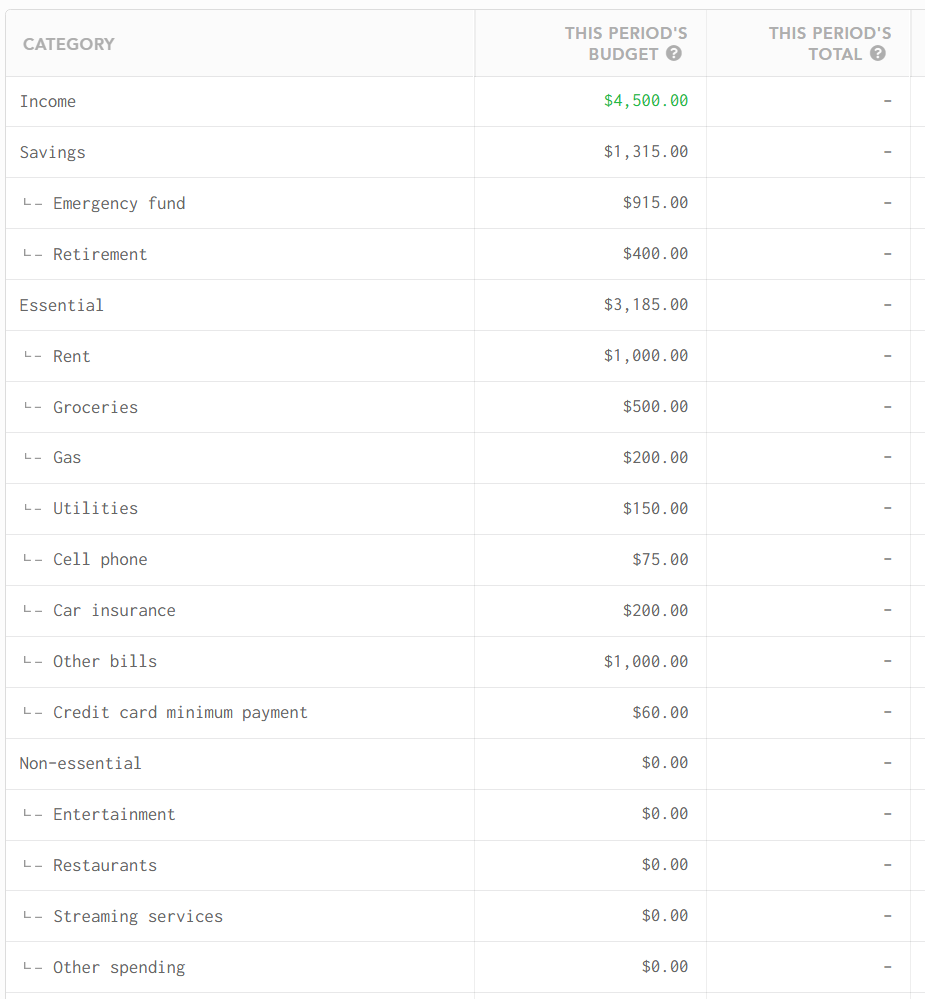
Lunch Money can help you navigate your no-spend challenge by allowing you to categorize all your transactions, so you can see exactly where your money is going. You can also set up your individual categories into sections where you can decide ahead of time exactly what is a necessity and what isn’t.
Here’s what a no-spend challenge budget could look like in the Lunch Money app:
[image: lunch money budget]
The best part is that you can get a 30-day free trial of Lunch Money that will support your no-spend challenge. Good luck!