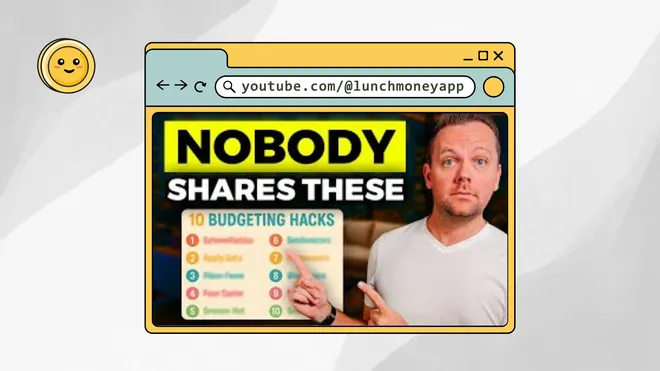
Too much budgeting advice just recycles the same hacks over and over again: make coffee at home, cancel subscriptions, start a side hustle…
But what if you’ve already tried all that, and you’re still struggling to stick to your budget and make ends meet?
Well, you’re in the right place! In this article, we’ll share some fresh, easy budgeting tips you’ve never heard of — including frugal living hacks, simple mindset tricks, and strategies for how to save money on a tight budget.
1. Use the Rule of One
You’ve probably heard of the 48-hour rule (waiting two days before you proceed with a purchase), but the Rule of One takes it a step further: for every $100 you plan to spend, wait at least a full day before making the purchase.
That means you would wait eight hours for a $30 shirt, while a $1,000 sofa would require a 10-day waiting period.
This rule gives you time to reflect on the purchase and helps curb impulsive spending.
If the item still seems worthwhile after the wait, you can purchase it. More often than not, though, you’ll realize you didn’t need it after all.
2. Preload gift cards
Certain budget categories, such as takeout or online shopping, can easily get out of control.
If you have trouble staying on track in specific areas, try preloading your budgeted amount onto a gift card.
For example, if you’ve set aside $100 for restaurants, buy a Visa gift card with that amount and use it exclusively for dining out. Once the balance runs out, you’re done spending in that category until your budgeting period resets.
This is one of the best monthly budgeting tricks since it creates firm limitations on spending. Just make sure to monitor the balance regularly so you don’t come up short at checkout!
3. Check in on a regular basis
Reviewing your spending regularly throughout the month can keep your budget on track. However, if you notice that specific categories often go off the rails (such as coffee runs or entertainment), schedule weekly check-ins specifically for those problem areas.
A quick review keeps you aware of your habits and lets you course-correct before things get out of hand.
Don’t be afraid to be honest with yourself either. Are you having trouble limiting spending in certain areas? Ask yourself why that is.
You can even rename those “problem” budget categories to remind yourself why you tend to overspend there. For example, you might call your “Takeout” category “Saturated Fat Addiction” instead.
4. Measure your spending in time, not dollars
Money can sometimes feel abstract, making it easy to justify spending $60 on dinner. When you reframe purchases in terms of time, however, it can make the cost feel more real.
First, figure out how much you earn per hour. Then, whenever you go to buy something, ask yourself how many hours you’d need to work to pay for it.
If you make $15 an hour, that $60 dinner would take four hours of work to buy.
Thinking in terms of time vs. dollars can help you understand the actual value of your money and make you think twice before splurging.
5. Use the reverse budgeting method
Typically, with traditional budgeting, you’d cover your bills and expenses first, then save whatever is left. But let’s be honest… “whatever’s left” is probably getting spent.
With reverse budgeting, however, you save first, then budget the rest.
When you get paid, pull out money for savings as soon as it hits your account (automation makes this super easy). So, if you earn $5,000 and you set aside $1,200 immediately, you know you’ve got $3,800 left for expenses.
If you’re looking for budgeting tips that actually work, start here. This method enables you to pay yourself first, keeping your spending in check so you can hit your savings goals.
6. Try the invisible raise trick
When your income increases, whether from a raise or a new job, it’s tempting to just spend the extra money. But if you give in to lifestyle inflation, you won’t be better off financially.
However, if you treat that extra cash like it doesn’t exist and send it straight to savings, you’ll unlock one of the most powerful frugal living hacks.
But let’s be realistic — you worked hard for that money and probably want to enjoy it! Another option is a 50/50 split, where you save half and spend half. That way, you can enjoy some extra fun money and continue to get ahead financially.
7. Tackle problem categories with the cash envelope method
The envelope budgeting method (also known as cash-stuffing) involves setting aside money in separate envelopes for each spending category.
Once an envelope is empty, you can’t spend any more in that category for the rest of the budgeting period (unless you move money from another envelope).
This method prevents overspending, but dealing only in cash can be pretty inconvenient.
Instead, try using cash only for problem areas. For example, create an envelope just for takeout or impulse shopping. It can help you keep spending in check while still using cards and autopay for your regular bills.
8. Create spending personas
Here’s a fun mindset trick: create spending personas — one that spends and one that saves.
“Weekday You” is the responsible one who sticks to their budget, cooks at home, and saves for the future. “Weekend You,” on the other hand, is fun, spontaneous, and guilt-free spending of budgeted fun money.
When you feel tempted to overspend, channel your inner weekday self: “Weekday Me doesn’t blow money on takeout — they cook at home.”
By shifting your mindset between these two personas, you’ll stay on track with your goals and have fun within your set limitations.
9. Plan for extra money that comes in
Are you expecting a tax refund, birthday gift, or bonus from work? Without a plan, that extra cash can easily be spent on your regular expenses.
To avoid that, you can split any extra money into percentages — like 50% to savings, 30% for fun, and 20% toward debt. Defining your goals ahead of time, ideally before the money hits your account, helps you stay intentional and focused.
Plus, since part of the money is going toward something meaningful, you can spend the rest guilt-free. It’s an easy way to balance fun while making progress toward your financial goals.
10. Do the no-repeat challenge
The no-repeat challenge is simple: if you spend money on a non-essential item, you can’t buy that same thing again for the rest of the week.
Did you grab a Starbucks on Monday? No more coffee runs until next week. Ordered takeout on Wednesday? You’re eating at home for a while. Rented a movie? You’ll have to look for a free option next time.
This challenge helps break the cycle of mindless spending while adding some variety to your week. You’ll still enjoy your favorite treats, but won’t repeat the same habits over and over.
How to use Lunch Money to automate the process
Want to know one of the best budgeting hacks? Use Lunch Money to create a budget you don’t hate. You can add fun categories, such as streaming, concerts, or travel, so your budget reflects what truly matters to you.
Once you connect your accounts, Lunch Money automatically pulls in your transactions and sorts them into separate expense categories. You might realize you’re spending $200 a month on fast food, which you’d rather put toward savings.
You can even set up savings goals to monitor your progress over time.
Try out Lunch Money for yourself with our free 30-day trial! It’s one of the easiest ways for beginners to start budgeting, as we offer a simpler approach to managing your money.
Key takeaways
Budgeting doesn’t have to be boring or restrictive. There are several creative strategies you can use to spice up your finances, including the Rule of One, preloaded gift cards, and the no-repeat challenge.
With these simple budgeting hacks, you work toward your financial goals while still having fun along the way.
Want more strategies for how to save money on a tight budget? Watch our YouTube video on simple frugal living hacks to learn more!