If you live in the Netherlands and you’ve tried finding a budgeting app that actually fits your financial life, you’ve probably noticed the options are limited.
Most popular personal finance tools are built for the American market. They don’t understand toeslagen. They can’t handle a three-pillar pension system. They struggle with multiple currencies. And if you’ve ever tried tracking your zorgtoeslag alongside your salary, a Wise account in USD, and your pensioenfonds deductions all in one place, you know how quickly things fall apart.
But Dutch users have been finding their way to Lunch Money. After the United States and Canada, the Netherlands is the third-largest country in our user base. That didn’t happen through advertising (we’ve spent $0 on ads). It happened because the product actually works for life in the Netherlands.
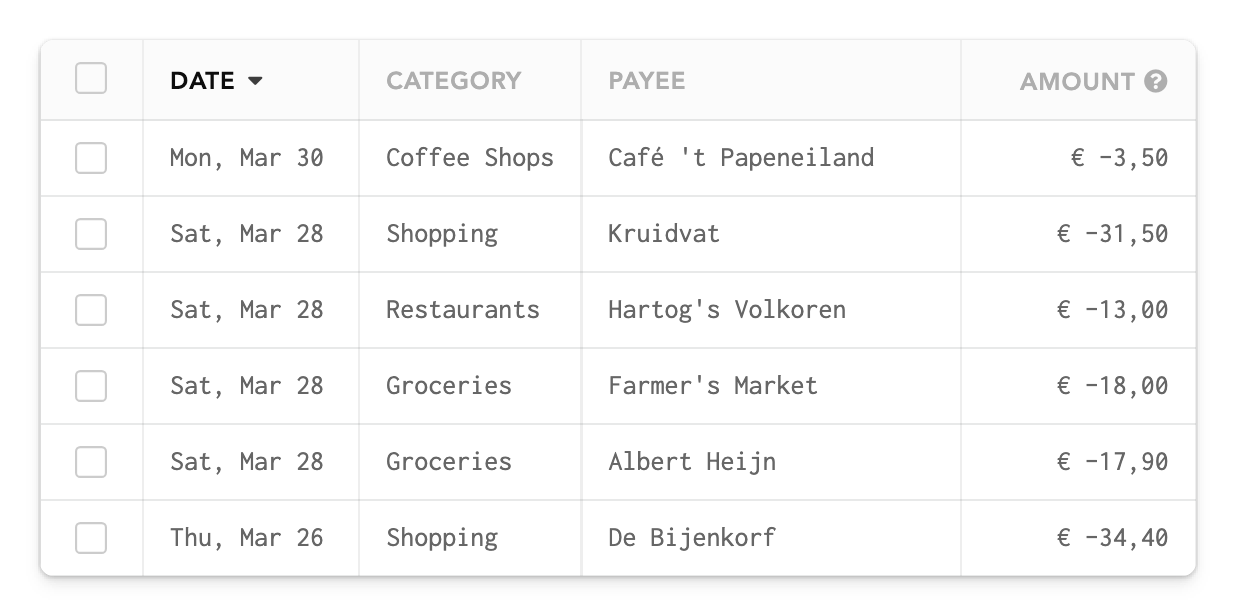
Here are some of the ways Lunch Money makes it easy for people in the Netherlands to manage their money.
Your price will never change (and you’ll pay in euros)
Unlike many subscription-based apps that bill in US dollars and quietly raise prices over time, Lunch Money believes in transparency. Once you sign up, your price is locked in for good.
No surprise increases, no confusing tiers, and no pressure to upgrade for basic features. Pay in euros via iDEAL for secure bank authorization, with recurring payments handled through SEPA Direct Debit—no foreign exchange fees and no credit cards required. What you see is what you pay.
Manage your money across currencies
Living in the Netherlands often means dealing with more than just euros. Maybe you hold foreign currency in a Wise or Revolut account, invest in American ETFs, or shop from UK retailers. If you work across the border in Belgium or Germany, you might earn or spend in different contexts entirely.
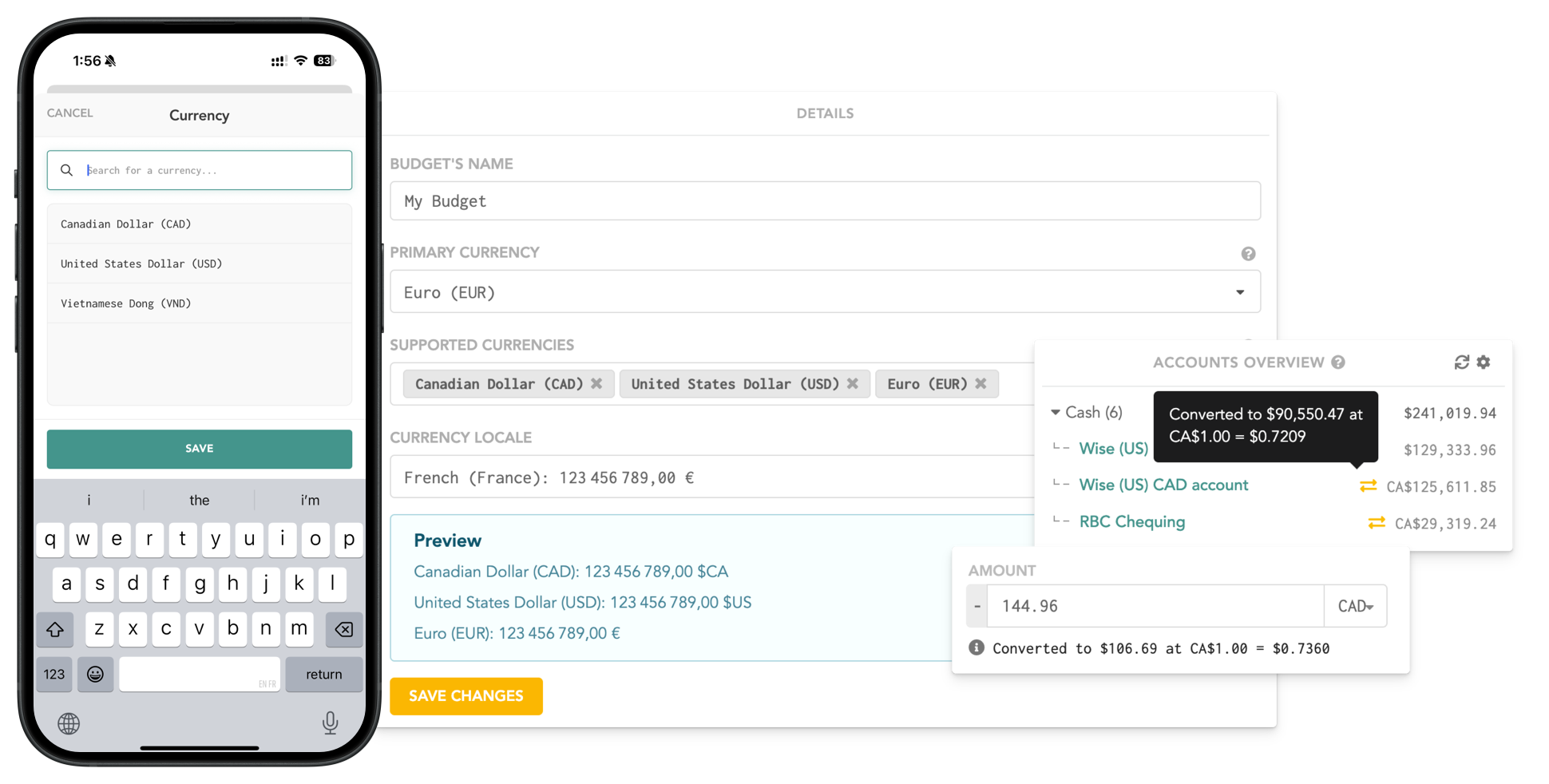
Lunch Money lets you set EUR as your base currency while tracking transactions in 160+ other currencies. Foreign purchases automatically convert so your totals always make sense, whether you’re budgeting for boodschappen at Albert Heijn or a weekend trip to Barcelona.
Even if you use neobanks like bunq or Revolut alongside your ING or Rabobank account, everything stays organized in one place.
Connects to Dutch banks
One of the biggest frustrations with American-based budgeting apps is unreliable European bank connections. Lunch Money connects to major Dutch banks, including ING, ABN AMRO, and Rabobank.
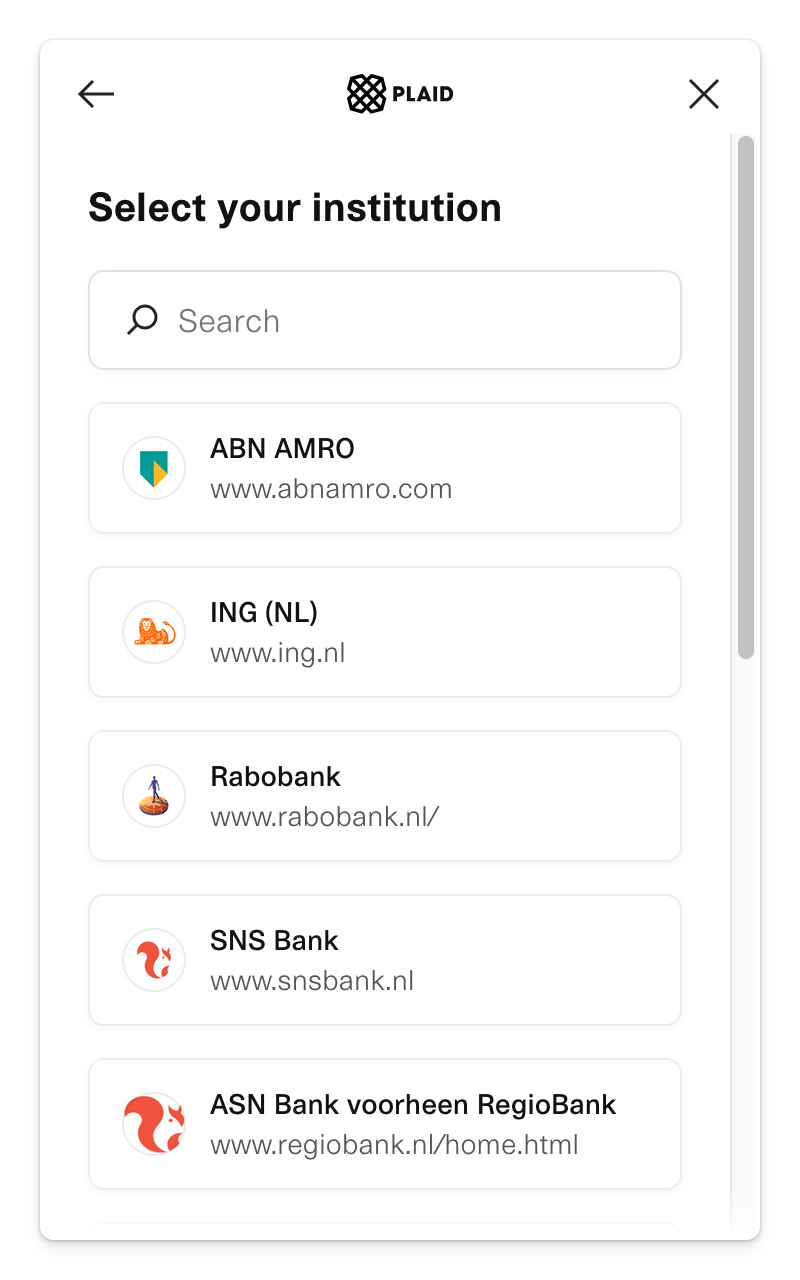
For institutions where automatic syncing falls short, there’s LunchFlow, a community-built syncing tool that connects to banks across 30+ European countries using PSD2 open banking APIs. You can also import via CSV and PDF from any Dutch bank, or use the Developer API to build your own integrations.
Between automatic syncing, LunchFlow, and manual import, your Dutch accounts are covered.
Flexible enough to track toeslagen, pensions, and taxes
The Dutch financial system has layers that most budgeting apps were never designed for. Lunch Money’s flexible category and tagging system makes it straightforward to track all of it:
- Zorgtoeslag (healthcare allowance) and huurtoeslag (rent allowance), recurring income that affects your monthly budget.
- Kinderbijslag (child benefit) and kinderopvangtoeslag (childcare allowance), government payments worth monitoring since income changes can trigger recalculations.
- Pensioenfonds contributions from your employer, so you can see retirement deductions alongside your take-home pay.
- Hypotheekrenteaftrek (mortgage interest deduction), tracking interest payments for your annual Belastingdienst filing.
For Box 3 planning, Lunch Money’s net worth tracker helps you see your full asset picture. Since the Dutch wealth tax is based on your holdings on January 1 (the peildatum), having a clear snapshot at year-end makes filing easier and helps you plan ahead.
When tax season arrives, you can export your categorized data for a clean overview of income, deductions, and asset changes throughout the year.
Built for expats too
If you’re on the 30% ruling, your take-home pay looks very different from a standard Dutch salary. You might be accruing partial AOW based on your years of residency while maintaining a pension in your home country, with bank accounts and tax obligations across multiple jurisdictions.
Lunch Money handles all of this. Set your base currency to EUR, add accounts in whatever currencies you need, and see your complete financial picture in one place. For expats filing taxes in multiple countries, having every transaction categorized and exportable saves real time during tax season.
Trusted by Dutch tech leaders
Lunch Money didn’t need to advertise its way into the Netherlands. It was discovered.
Alexander Klöpping, the Dutch tech entrepreneur behind Blendle, was one of the earliest Dutch users and still fills in Lunch Money every Sunday. In a recent edition of POM, the newsletter he co-hosts, he described the habit as “een soort financiële meditatie” (a kind of financial meditation).
Ernst-Jan Pfauth, journalist and co-founder of De Correspondent, has called Lunch Money “het beste persoonlijke boekhoudprogramma dat ik ken” (the best personal accounting software I know) and recommends it across his newsletter, tools page, and financial independence guide. He notes that it works with all Dutch bank accounts and that founder Jen is “superbehulpzaam” (super helpful) when you need support.
Together on POM, they’ve recommended Lunch Money to their readers multiple times, calling founder Jen a “vriendin van de show” (friend of the show). From early adoption to regular newsletter mentions, Lunch Money has grown in the Netherlands through genuine word of mouth.
Dutch developers are building on Lunch Money

The Dutch community isn’t just using Lunch Money, they’re building on it. Artem S., a developer based in the Netherlands, used the Developer API to create a Kid’s Companion App that helps his children learn financial habits. You can read more about his project in our March 2026 Community Spotlight.
The personal finance app for the Netherlands
Lunch Money is a personal finance app that actually fits life in the Netherlands. It connects to Dutch banks, handles multiple currencies, and gives you the flexibility to track everything from your zorgtoeslag to your Box 3 assets.
Whether you’re a Dutch native managing your household budget or an expat navigating the 30% ruling, everything stays organized in one place.
If you’re ready to take control of your money, start your 30-day free trial today. After that, you can rest easy knowing your price will never change.