Rising prices have made it harder for many people to make ends meet, let alone save for the future. It’s left many of us searching for creative ways to stretch our paychecks and squirrel away extra pennies wherever possible.
Luckily, you don’t need a total lifestyle overhaul to start saving more. A few minor tweaks can uncover hidden savings opportunities that can add up over time.
Let’s look at some simple, practical ways to save more money and keep making steady progress toward your financial goals.
11 savings opportunities hiding in plain sight
Audit your subscriptions
Though you may have “cut the cord,” all of your other subscriptions can cost more each month than you ever spent on cable.
Check your account statements to spot the common expenses people overlook. For example, you may have a gym membership you forgot to cancel or even two Paramount+ subscriptions hiding in the mix.
Cancel any duplicates and rotate your services monthly. If a show you love returns to Netflix, you can renew your subscription to watch it, then cancel again when you’re done.
Check your subscriptions inside apps
Speaking of subscriptions, it’s worth checking for extra charges inside the App Store or Google Play.
Sometimes you sign up for the paid version of an app, then forget to cancel it later. Because these purchases typically show up as “Apple” or “Google Play” on your statements, it can be difficult to pinpoint what they’re for.
Just open the App Store on your mobile device, go to Settings, and look for the Subscriptions section. Aim to do this once per quarter to make sure you’re not paying for anything you don’t actually use.
Re-shop your insurance
Have you noticed your insurance premiums creeping up over time? Car, home, renters, and life insurance costs can vary widely, so shopping around could save you a lot of money each year.
Experts recommend reviewing your coverage annually to make sure you’re getting the best deal. You might even find a policy that offers better protection for the same price.
Some insurers do offer loyalty discounts, but it’s still smart to compare quotes regularly — and many companies will even price-match.
Review banking & credit card fees
Financial fees might seem small on their own, but they can add up over time, making them one of the easiest hidden savings opportunities to miss.
Some banks charge monthly maintenance fees unless you keep a certain amount of money in your account. To avoid this, look for institutions that don’t have minimum balance requirements.
You can also look for banks that reimburse ATM fees or don’t charge them at all. Some credit cards even waive foreign-transaction fees, so you can save while traveling.
Leverage loyalty points (before they expire)
Many people forget about unused loyalty points from gas stations, grocery stores, or credit cards. But if you don’t use them in time, they could expire.
Log in to your accounts to check your balances and see how you can redeem them. You can often use these points for essentials, like gas, groceries, or household necessities.
Some programs even let you transfer or combine points across accounts or redeem them for extra value with participating partners.
Bundle or unbundle services strategically
Many companies offer discounts when you purchase more than one service. For example, insurers often offer multiple-policy discounts for bundling home and auto policies.
However, just because you bundle something doesn’t always mean it’s the best deal. Sometimes, paying for different services separately is actually cheaper.
Once a year, review your service packages and price out what it would cost to pay for them individually, and whether it would save you money.
Negotiate your internet or phone plan
Did you know you can negotiate a lot of your monthly bills? You might save hundreds of dollars with just a quick phone call.
Many companies, including internet, cable, and phone providers, will lower your rates if they’re worried about losing you as a customer. They often offer “promotional” or loyalty pricing to keep you from switching.
Try calling once a year to ask if you’re getting the best available rate, and mention competitor offers for extra leverage. You can also check your plan details to see if you’re paying for more speed, data, or channels than you actually use.
Cut utility waste
Utility bills are easy to overlook because the costs often feel fixed. While savings might not seem huge, reducing your energy and water use could add up to a lot of money long term.
Think about simple ways to trim your utility bills. For example, you may be able to keep your electricity bill down by using LED lightbulbs or unplugging idle devices.
Some homeowners have also saved on their gas bill by installing an energy-efficient furnace or using a smart thermostat. And don’t forget about water. Fixing leaky faucets and pipes could help you use less water and save more each month.
Shop smarter for groceries
It’s no secret that eating at home costs less, but your grocery list might be full of hidden savings opportunities as well.
One of the best ways to avoid food waste is to plan your meals. Before you go to the store, make a list of everything you need, and don’t deviate from it once you get there.
You can also try out some frugal living hacks, like buying generic brands and bulk staple items when it makes sense. Just be sure to check the per-unit pricing to confirm you’re getting the best deal.
Review your subtle “convenience” spending
Sometimes it’s tempting to spend a little extra just to get rid of a problem. Don’t want to pick up the pizza? Have it delivered. Tired of ads? Upgrade to premium.
These quick fixes feel harmless, but paying for convenience can become a habit that quietly eats away at your paycheck. Take a look at areas where you’re paying simply for convenience and ask yourself, “Would I still choose this if it weren’t automatic?”
You can also try pausing a few of these services to see if you actually miss them. You may find that choosing store pickup or standard shipping isn’t such a big deal and leaves more money in your pocket.
Bonus tip! Automate price tracking
Another trick is to set alerts for things you buy regularly, such as household staples, pet food, or skincare products. That way, you’re notified when the price drops.
Browser extensions and price-history tools can track fluctuations, display the lowest listed price, and ping you when an item falls below a certain price.
When you get an alert, you can stack coupons, loyalty points, or cashback to save even more. This can turn impulse buys into planned purchases while ensuring you get the best possible price.
How Lunch Money can help you find savings opportunities
It’s easy to find hidden savings opportunities with Lunch Money. The app automatically syncs and categorizes your transactions, so you can see exactly where your money is going and where you might be overspending.
For example, a quick look at your subscriptions budget category could reveal you’re paying for services you no longer use. Or you may be shocked to learn you’re spending nearly $300 more on food than you thought each month.
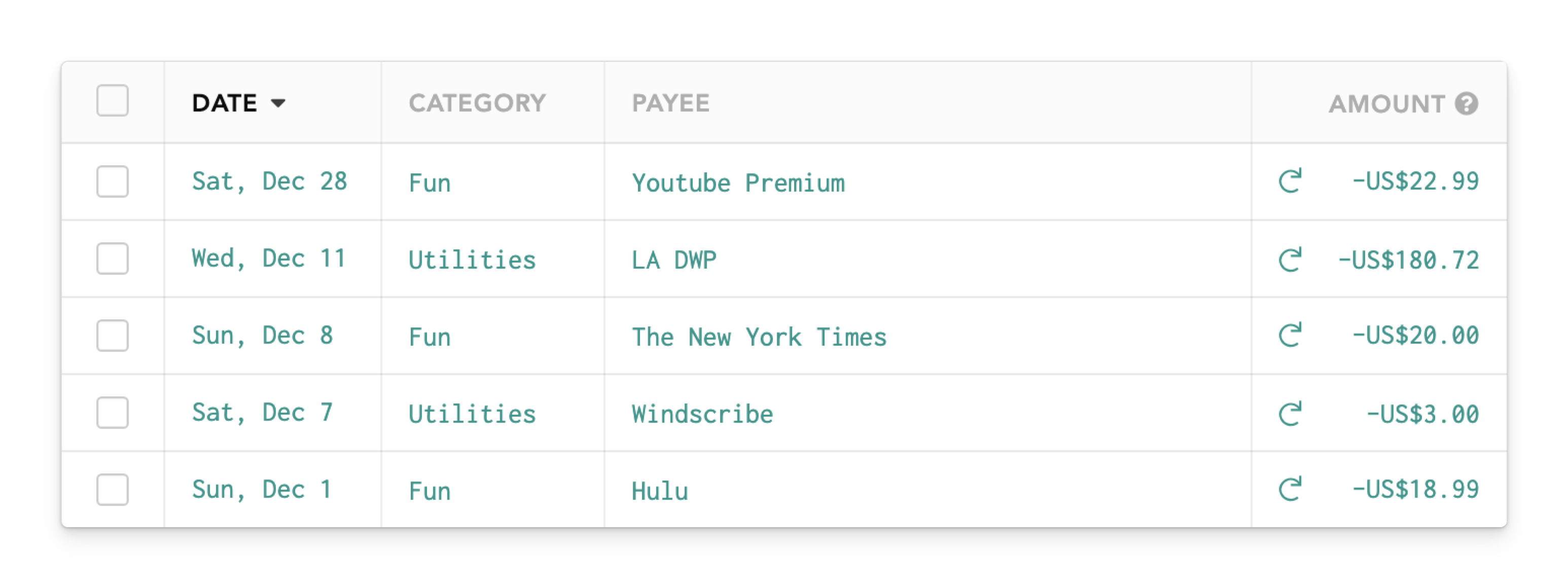
You can also view your spending trends over time to see which categories tend to get out of hand every month. With that insight, you can cut out the stuff you don’t care about and put away more for the future.
Summary
Saving a few bucks here and there may not feel like much, but small actions can add up over time.
The best part is that it doesn’t take a ton of effort. Calling your service providers to negotiate better rates and setting up price alerts doesn’t take much time and can have a bigger impact than you think.
Lunch Money is one of the easiest ways to identify hidden savings opportunities and take control of your finances. Start your free 30-day trial today and see how we can help you save even more!