Everyone seems hooked on subscriptions these days, but they can eat up a massive chunk of your paycheck if you don’t budget for them properly. The key is to set a limit on your subscription budget category, then prioritize the ones that matter most to you.
While a service may be worth it for one person, it may not be for another. Once you know how much you can allocate toward subscriptions, you can decide which ones to keep and which to axe. To help, we’ve compiled a few subscription services worth keeping, as well as some you might want to cancel.
Subscription services worth keeping
Cloud storage
Cloud storage platforms, such as Google One or Dropbox, automatically back up your important files, like photos, documents, and notes. That way, if your computer ever crashes, you won’t lose everything.
While you can back up your files to an external hard drive, there’s always the chance that it could get lost, damaged, or stolen. For many people, the small monthly fee is worth the added security and convenience.
Password manager
Trying to remember all your passwords is almost impossible, and writing them down isn’t very secure. A password manager like LastPass can be a huge help here.
It not only stores your passwords but also keeps your credit card and bank information, then autofills the details at checkout. This subscription could save you time, reduce stress, and keep your accounts safer.
Music streaming
Many music streaming platforms, like Spotify and Pandora, let you listen for free with ads. But if music is your way to unwind or help you sleep, the ad breaks every few minutes could have the opposite effect.
Paying for a music streaming service could be worth it if you use it often. You might even consider YouTube Premium. It’s pricier, but the ad-free videos and music could make it worth every penny.
Video streaming (one or two)
Most of us like watching a good movie here and there… or binge-watching an entire season of Bridgerton in a day. But with shows constantly jumping between platforms, subscribing to multiple streaming services can be more expensive than cable.
A simple workaround is to limit yourself to one or two services at a time and rotate them. If a favorite show comes back to a different platform, switch to that service for a month, watch what you want, and then cancel when you’re done.
Meal planning apps
Meal planning apps can be a good idea for some people. Many can auto-generate weekly meal plans based on your diet, budget, and schedule, and even build your grocery list.
If you’re short on time or trying to build a consistent habit of eating at home to live within your means, this subscription may be worth it. It can also help you eat healthier and stick to your food budget.
Fitness apps you actually use
A fitness app subscription can be a good investment, especially if it helps you stay active, manage stress, or build a regular workout routine. The right app can improve your health and potentially save you money on medical bills down the road.
Just be careful with subscriptions you don’t actually use. If you’re paying for an app you haven’t opened in months, it’s not helping your health, so it’s usually best to just cancel.
Skill-building or learning platforms
If you want to learn new skills, you might consider a subscription to a platform like Skillshare or LinkedIn Learning. These services offer a ton of courses on writing, design, marketing, software tools, and more.
An annual subscription could be more cost-effective than buying multiple courses individually. It can also help you build skills to support your career growth, potentially leading to higher earnings and preparing you financially for unexpected job changes.
News you read regularly
It’s important to stay up to date on current events, and depending on your job, keeping up with the news and the latest industry trends may even be essential. If there’s a publication you read consistently, a subscription can be worth keeping.
Many news outlets offer free or discounted trials for the first few months or even the first year. Just make sure they’re sources you actually read — not ones you’re planning to read later.
Groceries or household essentials subscription (if it truly saves)
Subscriptions like Walmart+ or Amazon Fresh might save you money on groceries and household essentials if you order often enough to offset delivery fees. Having items delivered to your doorstep can also cut down on gas and help you avoid impulse spending at the store.
Thrive Market and certain meal kit deliveries can also be useful if you follow a specific diet, such as paleo or Whole30. They can help you stay on track with your health goals and may offer exclusive deals on specialty or clean-ingredient foods.
VPN or security tools
If you work from home or spend a lot of time online, a good VPN or security suite can be worth keeping. These tools protect your personal information, keep your data private on public Wi-Fi, and help safeguard your devices from malware or cyberattacks.
They’re especially useful for remote workers who regularly access work files, log into shared networks, or handle sensitive information. Free options are available, but paid VPNs and security tools may have stronger protection, faster speeds, and more reliable privacy features.
Subscription services you should consider cancelling
Duplicate video streaming services
It’s surprisingly easy to end up paying for the same streaming service twice. Maybe you signed up with a different email and forgot, or your spouse created their own account without realizing you already had one.
To prevent this, keep an eye on your transactions for double charges. Lunch Money makes managing recurring items simple: just go to the “Recurring Transactions” tab to spot any duplicates.
Apps you haven’t opened in 30+ days
If you haven’t used a service in more than 30 days, there’s a good likelihood that you don’t need it, especially if you’re trying to live more frugally.
You can always unsubscribe for now and then resubscribe later if you find you genuinely need it again.
The “free trial,” you forgot about
We’ve all signed up for a free trial of something, but then completely forgotten to cancel.
If you missed the cancellation window by a day or two, you may be able to contact the company and request a refund. To avoid this in the future, mark the trial’s end date on your calendar to remind yourself to cancel.
Unused gym memberships
Gym memberships are tricky because you keep telling yourself you’ll start going again “next week”. But if you keep putting it off, the membership fees just keep draining your account each month.
Try setting a concrete date for when you’ll return. If you don’t go by then, it’s probably time to cancel. You can always switch to simple at-home workouts, like calisthenics, to rebuild the habit and rejoin the gym later when you’re ready.
Loyalty memberships you don’t use
Stores sometimes offer paid loyalty programs that promise exclusive discounts and perks — but they’re not always worth the premium.
Take a moment to calculate how much you’re actually saving and whether it truly offsets the membership fee. You should also be careful of these programs because they often encourage you to spend more by making it feel like you’re saving money, even when you’re not.
A gaming subscription you rarely use
Between Xbox Game Pass, PlayStation Plus, and Nintendo Switch Online, along with rising game and console prices, gamers are paying more out of pocket than ever.
Set a monthly gaming budget that includes both new games and subscriptions. Prioritize the services you use the most and rotate the others, just like you would with video streaming.
Premium versions of apps (when the free version works fine)
Some apps offer small paid perks, like removing ads or customizing the interface with different colors or icons. While those features are nice to have, they may not be worth the cost of a monthly subscription.
If the free version meets all your needs, it might be smarter to stick with it. A few ads may be a small trade-off if they help you make more progress toward your financial goals.
How Lunch Money can help you audit your subscriptions
One easy way to stay on top of your subscriptions is by creating a dedicated category group in Lunch Money. When all of your streaming services, apps, and recurring charges are in one place, you can instantly see how much you’re spending each month.
From there, doing a quick subscription audit is simple. Lunch Money makes it easy to spot duplicate charges, services you haven’t used in a while, or other expenses you’ve overlooked.
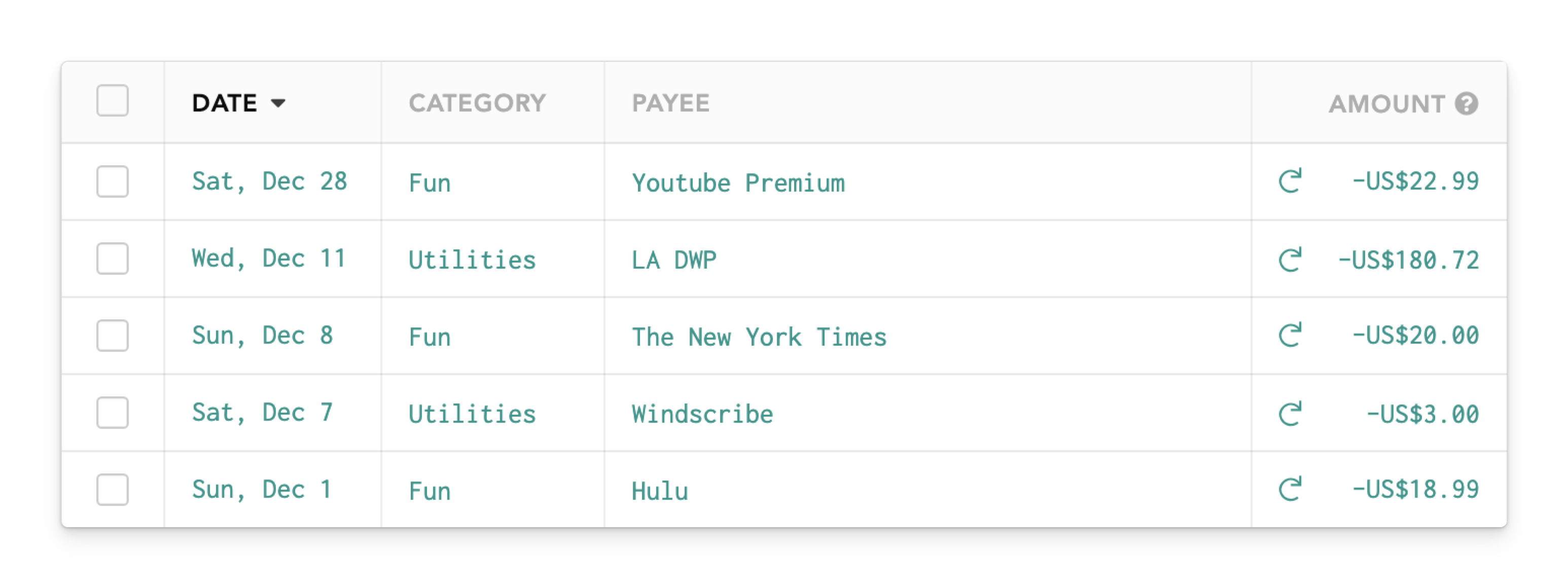
You can also compare costs over time to decide which subscriptions are still worth it and which ones you want to cancel to save money.
Summary
Subscriptions can quickly add up to hundreds of dollars each month if you don’t keep track of them, but that doesn’t mean they’re all bad. The goal isn’t to cancel everything; it’s to prioritize the ones that actually add value to your life.
By reviewing your services every few months and tracking your spending in Lunch Money, you can keep the subscriptions that make your life easier and cancel the ones that don’t.
Sign up for a free 30-day trial of Lunch Money today to see how we can help you take control of your finances.