For many Lunch Money users, reliable bank syncing is an important part of making budgeting feel seamless and sustainable. While Lunch Money offers official bank syncing in many countries, including the U.S. and Canada, users outside Plaid-supported regions are often looking for additional options and broader bank coverage. One of the great things about the Lunch Money community is how quickly people find creative ways to fill those gaps.
This month, we are highlighting Synci, a bank syncing service that connects to more than 2,500 banks across 31 European countries through GoCardless and can automatically sync transactions into Lunch Money. It also gives users more control over how their transaction data is cleaned up, transformed, and categorized before it reaches Lunch Money.
This month’s spotlight is on Matias Tonning, founder of Synci, from Bergen, Norway

1) Hi Matias! Please tell us a bit about yourself.
My name is Matias Tonning. I live in Bergen, Norway, and I’m the founder of Synci.
I wrote my first line of VB.NET code when I was 11 years old and have been hooked on building things ever since. Over the years, I’ve explored a wide range of programming languages and platforms. I have a bachelor’s degree in business administration and currently work as a Product Manager at a B2B fintech company focused on open banking and accounting automation.
2) What is Synci, and how did it get started?
I started budgeting with YNAB in 2023, but at the time, bank coverage in Norway wasn’t great. I entered data manually for a while, but eventually realized it just wasn’t sustainable for me.. I wanted to budget, not spend my evenings copying transaction data.
That frustration led to the creation of Synci.
Over the next couple of years, we started getting requests to support additional budgeting apps. Lunch Money was one of the most requested. We decided to rebuild the platform from the ground up to create a stronger foundation for new integrations, and Lunch Money became the first new destination we added.
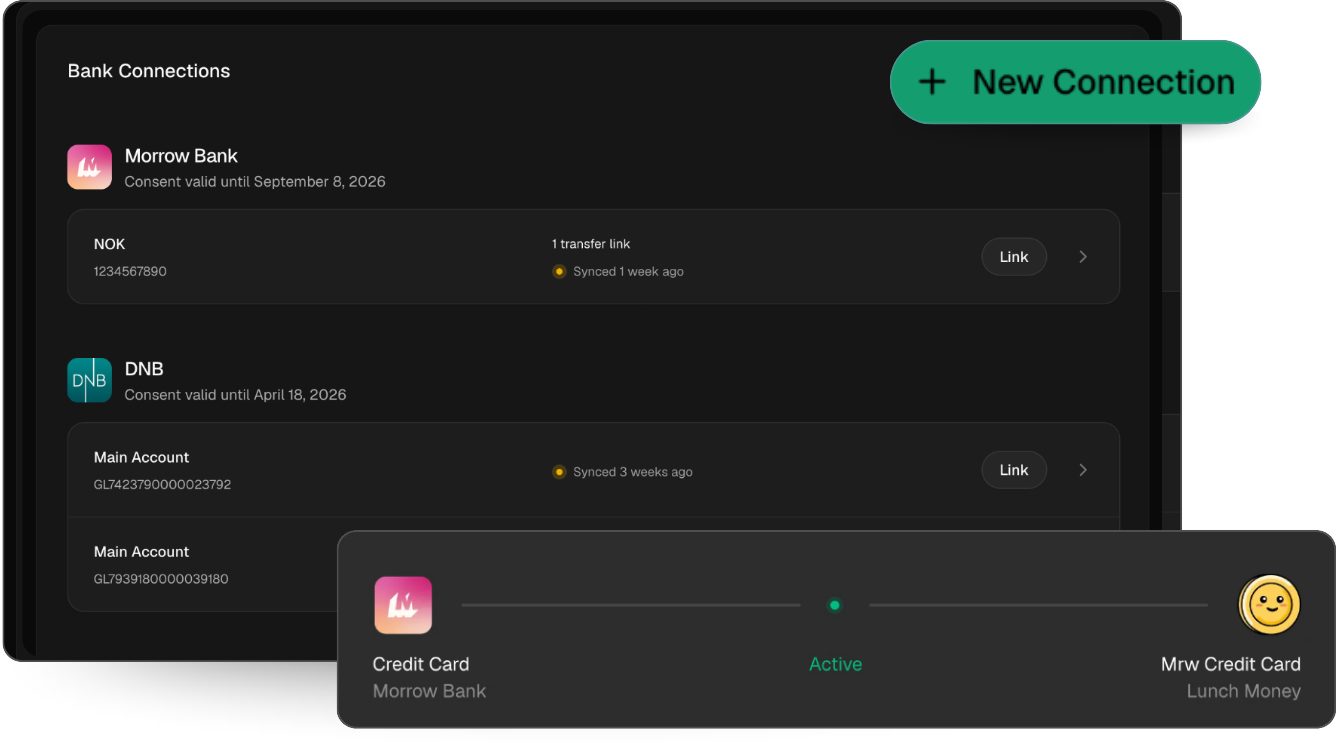
Today, Synci connects to over 2,500 banks across 31 European countries using regulated PSD2 APIs through our partner, GoCardless. Depending on your plan, transactions are automatically synced every 30 to 360 minutes. This includes pending transactions if your bank supports them. Once a pending transaction is finalized, Synci automatically updates it in Lunch Money with any new information from the bank.
3) What kind of Lunch Money user is Synci best suited for?
Synci is ideal for Lunch Money users who either can’t connect their bank to Lunch Money natively, especially users with European banks, or who want more control over how their transaction data is handled before it reaches Lunch Money.
That might include cleaning up merchant names, auto-categorizing transactions, filtering out noise, or splitting data across multiple destinations.
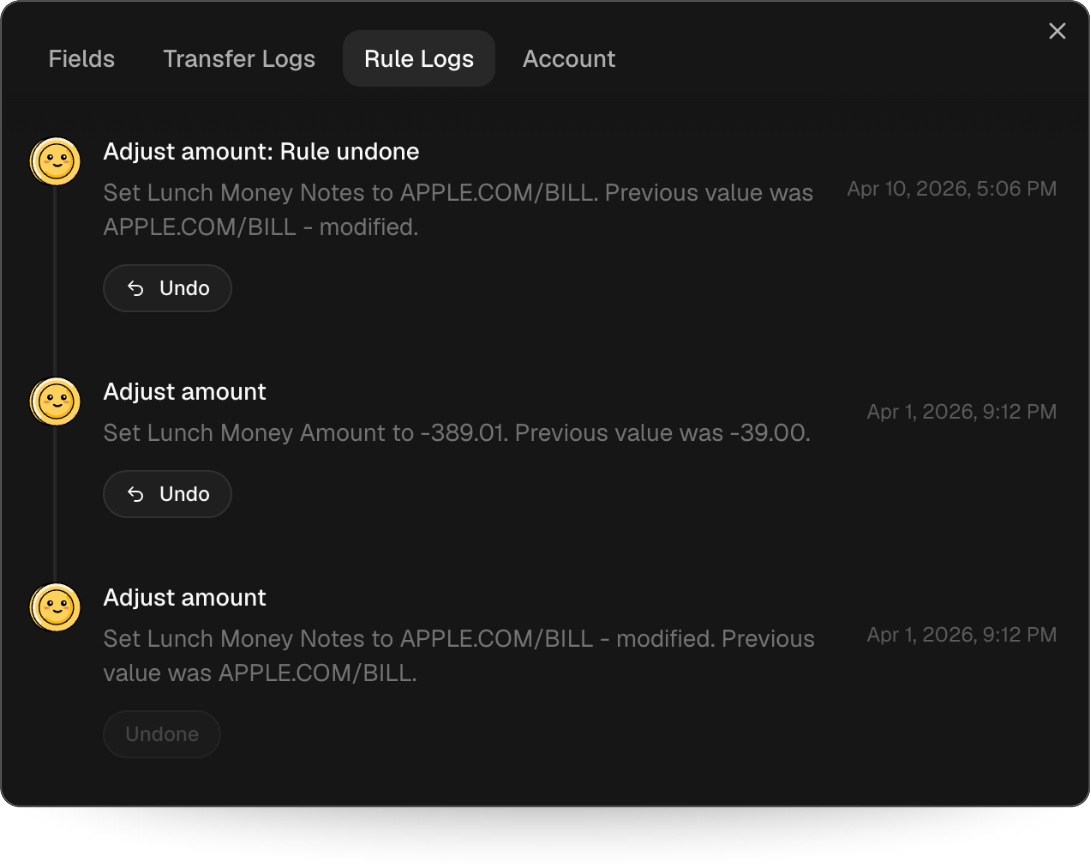
The rebuild also introduced advanced transaction rules that let users customize how their banking data is processed before it reaches Lunch Money. For example, you can strip prefixes from memos, rename payees, auto-categorize, filter out internal transfers, do math on amounts, and more.
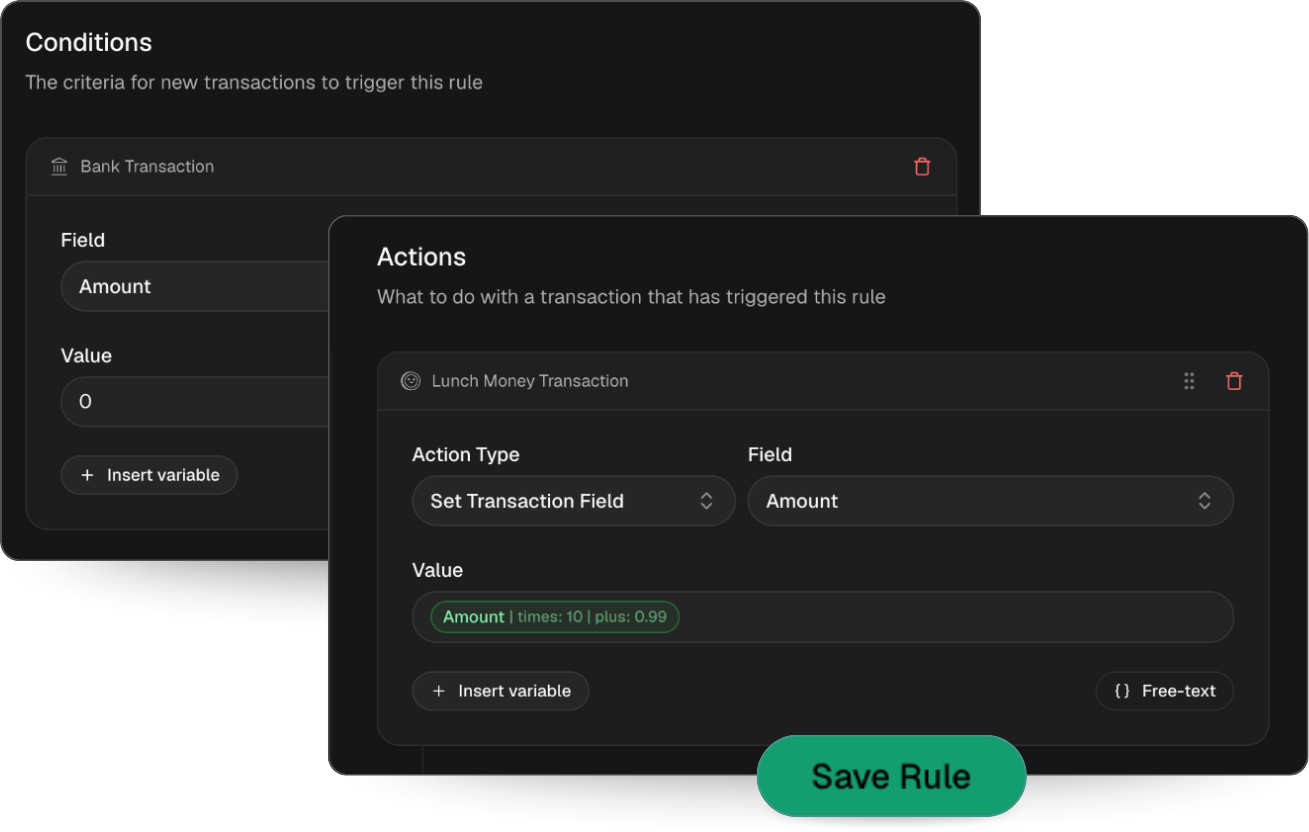
Synci also includes AI-powered enrichment tools that clean up the messy merchant names and metadata banks love to send, replacing cryptic transaction strings with clearer merchant names. The goal is to give you complete control over your financial data, regardless of the quality of the original bank data.
4) Bank connectivity is notoriously messy. What is the hardest part of keeping something like Synci running reliably?
The biggest challenge is the different “dialects” banks use.
Synci currently relies on PSD2, the European open banking standard. In theory, that should make things straightforward. But in practice, banks interpret the standard differently and structure their data in their own ways.
Some banks place merchant names in the creditor field, while others bury them in an unstructured memo. Some include reference numbers in the description, others don’t include a description at all. That’s manageable if you’re building a personal tool for a few banks. But supporting more than 2,500 banks at scale is a completely different challenge.
To solve this, Synci uses a combination of a customizable rules engine and AI features. The rule engine supports dynamic expressions, regex, math operations, and chained filters, so it can handle pretty much anything a bank throws at it. If a bank delivers data in a “weird” way, we can quickly customize the logic for that specific bank.
And our users have access to the same level of customizability. Anyone can create rules and configurations to ensure their bank data is read correctly, without duplicates or unintelligible merchant names. You can even preview rules against real transactions before enabling them, making it easier to see exactly how your data will be processed.
5) Users need to enter their Lunch Money API key to use Synci. How does Synci use and protect that key?
Security is something we’ve built around from day one.
All data is encrypted at rest and in transit, and sensitive information, such as Lunch Money API keys, is protected by an additional layer of field-level encryption. So even in the unlikely event of unauthorized database access, the keys would remain unreadable.
Our infrastructure is hosted in the Netherlands, and we never access users’ bank login credentials. PSD2 APIs are read-only by design, meaning Synci can only read your bank data, never modify it. Users can also secure their Synci accounts with two-factor authentication and passkeys, including biometrics and hardware security keys.
As for how the Lunch Money API key is used, it’s limited to two functions:
- Fetching your Lunch Money budget and accounts, so you can choose which bank accounts should send transactions to which Lunch Money accounts.
- Sending your transactions to Lunch Money.
That’s it. Synci doesn’t read, modify, or delete anything else in a user’s Lunch Money account.
6) How do you think about the responsibility of handling people’s financial data as an indie builder?
It’s something I think about all the time.
Users are trusting us with highly sensitive financial information, and I take that responsibility seriously. While it can be daunting as a small team at times, I have strong confidence in our security architecture and the protocols we’ve built to minimize risk.
One example is our strict data retention policy. Synci automatically deletes banking data and associated records, including transactions, balances, transfer logs, rule logs, and bank logs, once they cross a user-defined retention limit. No soft deletes, no hidden backups.
For most users, the default retention period is 30 days, but you can customize it anywhere from 7 to 365 days. Synci is designed to be a data transporter, not a data harvester. We do not use customer data in any way beyond what the user has configured.
I also think being small and bootstrapped is an advantage. We can prioritize privacy without worrying about investor pressure or growth targets. If scaling the business ever required us to compromise our users’ privacy, we’d rather shut it down.
7) There are a lot of budgeting tools out there. What made you prioritize adding Lunch Money support?
Initially, it was simply one of our most requested integrations. I’d known about Lunch Money for a while, but it wasn’t until we started building the integration that I gained a deeper appreciation for the product, the API, and the team around it. The developer relations team has been incredibly helpful, the API is clean and well-documented, and the product clearly has a community that cares about it.
Ironically, I haven’t done much active budgeting over the last year, but when I get back into it, Lunch Money is at the top of my list.
8) You built your integration using the new v2 Lunch Money API. How was that experience?
The v2 API has been a joy to work with. Upgrading from v1 was easy, and our Lunch Money integration, which now runs primarily on v2, has been very stable so far.
One feature I’d still love to see is the ability to set pending or booked transaction status on posted transactions. Synci already supports pending transactions and automatically updates them in Lunch Money once they settle. Being able to flag that status natively would make the experience even smoother for users who want real-time visibility into their budget.
9) Is there anything you would like to ask the Lunch Money community?
Our Lunch Money integration is still relatively new, so we’re eager to learn what matters most to Lunch Money users specifically. If you try Synci with Lunch Money, I’d love to hear both the good and the bad. What’s working, and what’s missing? At this stage, your feedback directly shapes what we build next.
If you’d like to give it a try, you can use the coupon code LUNCHMONEY to get the first two months free. The code works for any plan or subscription length, and you can cancel at any time while still keeping access for the full two months.
Thanks, Matias! Synci looks like a great option for European Lunch Money users who want broader bank coverage or more control over how transaction data arrives in their accounts.
Toronto Meetup 🍁
Don’t miss out on our second official Toronto meetup on Friday, June 19!
The entire Lunch Money team will be there, and we’re super excited to spend time with our amazing community, chat about finances (and more), and hang out over pizza and drinks.

Not in Toronto, but want us to visit your city? Fill out this form.
Follow Jen’s journey 👋
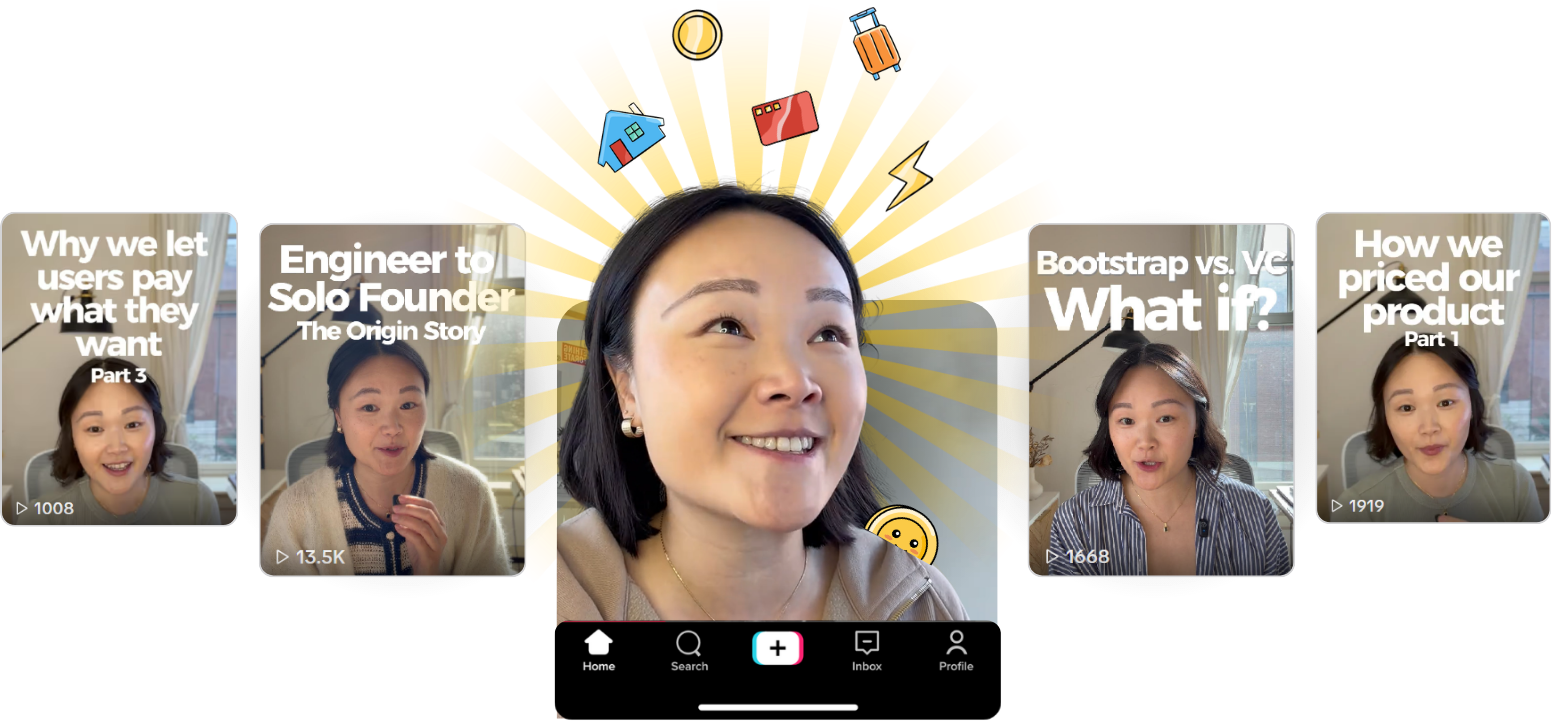
Our founder, Jen, has been spending more time sharing behind-the-scenes updates on everything from building Lunch Money to the founder lifestyle, AI/tech/biz news, and more. Come say hi, ask questions, or just follow along as Lunch Money continues to grow!
Call for community spotlight nominations 🗳️
Have a story you’d like to share with the community? It doesn’t have to involve building an app. We’d also love to hear how you use Lunch Money or how it’s made an impact in your life.
If you have a story you’d like to share, please fill out this quick form:
Latest from YouTube! 📺
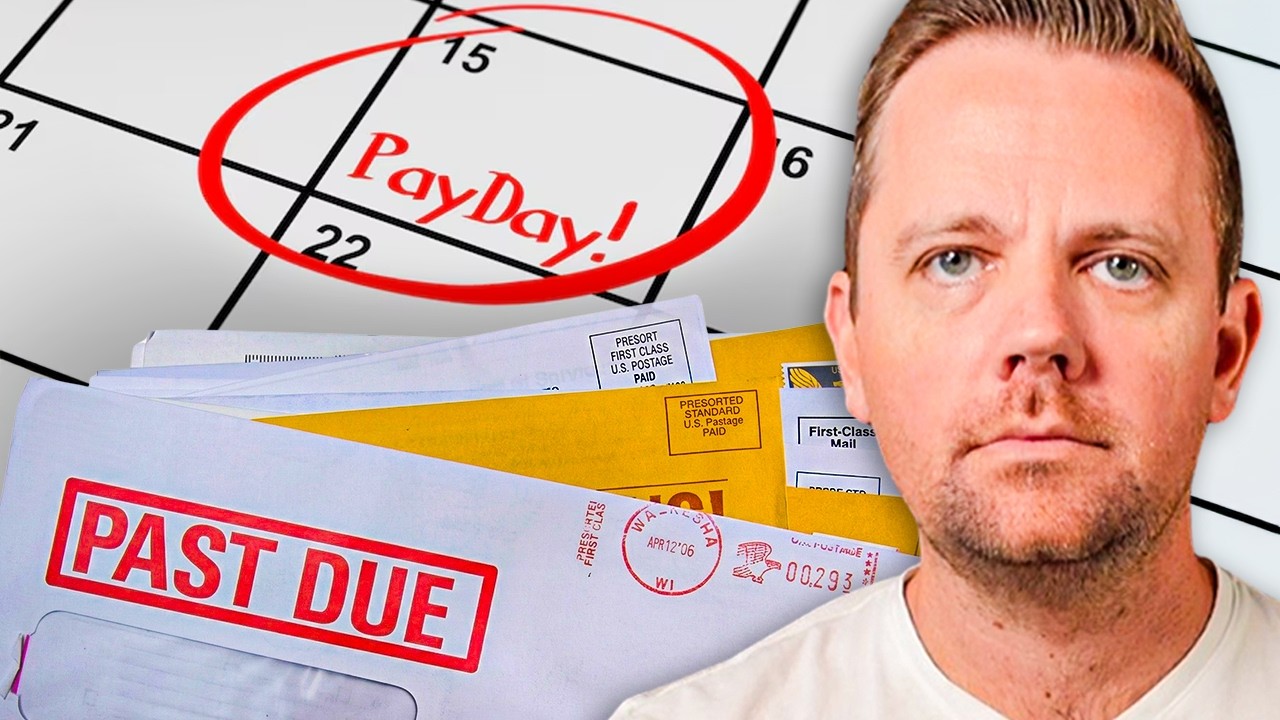
Are your bills constantly due before payday, leaving you feeling behind? The problem usually isn’t your income. It’s your timing. ⏰
In our latest YouTube video, Jacob shares a practical system for fixing cash flow timing issues and getting ahead of your bills for good. Learn how to budget by paycheck, align due dates with paydays, build a one-month buffer, and create a stronger financial foundation.
From the blog! 📝
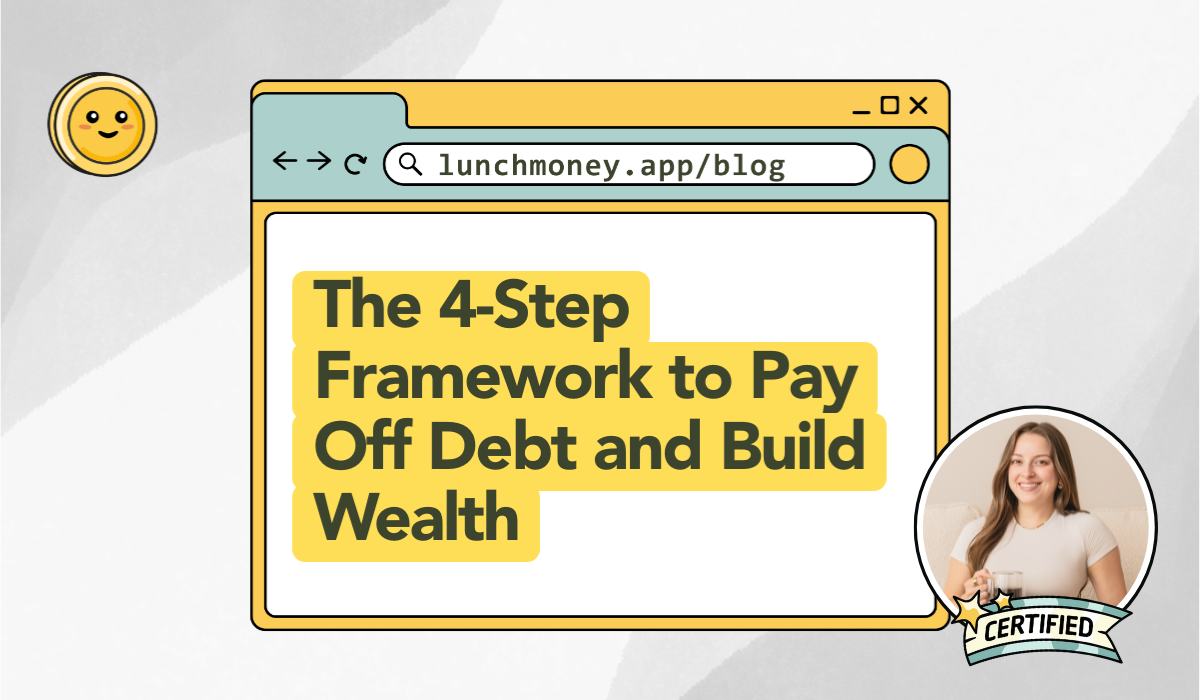
If you’ve ever avoided logging into your bank account, felt overwhelmed by debt, or told yourself you’ll start budgeting next month, you’re definitely not alone. 💸
In this guide, certified Lunch Money coach Leila Kartforosh walks through a simple 4-step framework to help you gain clarity on your finances, create a budget you can stick to, build better money habits, and start paying off debt while growing long-term wealth!
Looking for more personalized help? Visit our Coaching Directory to connect with Leila and other certified Lunch Money financial coaches.
Refer a Friend, Earn Credit 💸️
Love using Lunch Money? Share it with a friend to grant them a 60-day trial, and earn 10% of their subscription cost as account credit every time they pay!
Connect with us on social media! 📱
We’d love to connect with you on social media. Find us on the following platforms: